भगवद्गीता 12.17
Bhakti Yoga · हिन्दी अनुवाद
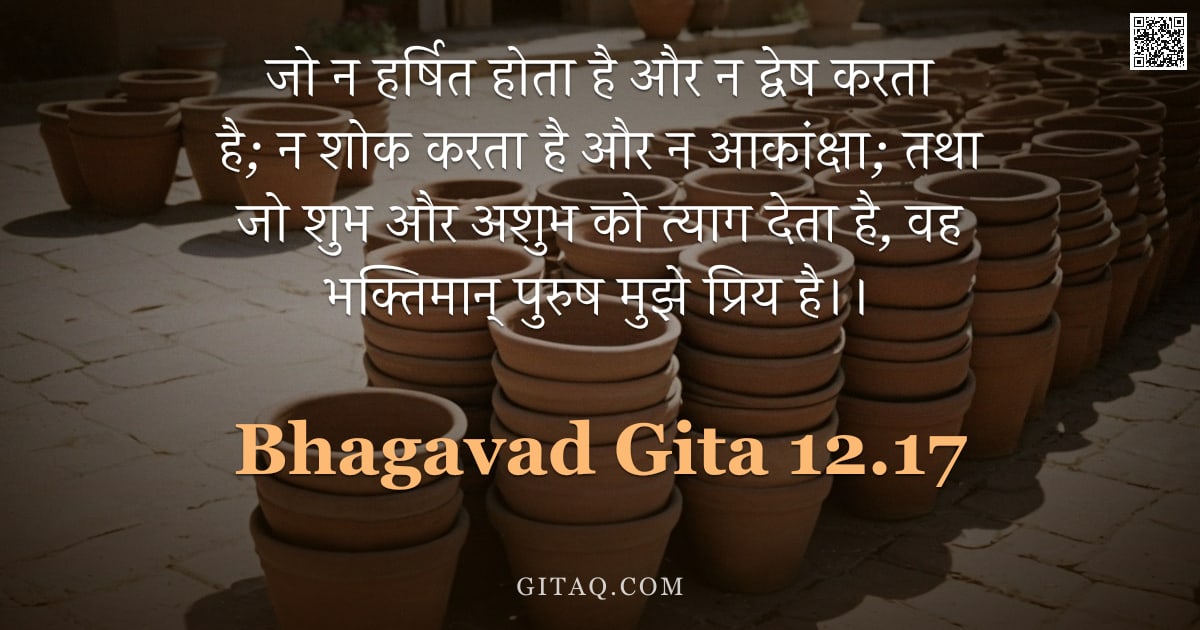
यो न हृष्यति न द्वेष्टि न शोचति न काङ्क्षति | शुभाशुभपरित्यागी भक्तिमान्यः स मे प्रियः ||१२-१७||
yo na hṛṣyati na dveṣṭi na śocati na kāṅkṣati . śubhāśubhaparityāgī bhaktimānyaḥ sa me priyaḥ ||12-17||
इस श्लोक का अर्थ क्या है?
कृष्ण अर्जुन को बता रहे हैं कि भक्ति का सर्वोच्च लक्षण संतुलित मन है। जो व्यक्ति न खुशियों में आसक्त होता है, न दुखों से डरता है, और न ही किसी चीज़ की तलाश या त्याग करता है, वह परमात्मा को अत्यंत प्रिय है। यह श्लोक बताता है कि शुभ (अच्छे) और अशुभ (बुरे) परिणामों के प्रति समभाव बनाए रखना भक्ति का मुख्य अभ्यास है।
इसके पीछे का सिद्धांत
यह शिक्षा मुख्य रूप से 'भक्ति योग' का हिस्सा है जो 'कर्म योग' और 'ज्ञान योग' के सिद्धांतों को एकत्रित करता है। यह श्लोक 'समत्व' (Samatva) या समभाव की अवस्था को विकसित करता है, जहाँ आत्मा बाहरी परिस्थितियों से प्रभावित नहीं होती। भक्त का उद्देश्य ईश्वर के प्रति पूर्ण समर्पण होता है न कि फल की इच्छा करना।
शब्दार्थ
पारंपरिक भाष्य
यह कहाँ घटित होता है
यह संवाद महाभारत के कुरुक्षेत्र युद्ध के मैदान में चल रहा था जहाँ अर्जुन ने अपने सभी स्वजन और गुरुओं को देखकर हथियार फेंक दिए थे और दुख से व्याकुल हो गया। भगवान श्री कृष्ण, जो उसे संघर्ष की ओर ले जाने वाले हैं, पहले 'ज्ञान योग' (अध्याय 2) के माध्यम से आत्मा की अमरता समझा चुके थे और अब वे 'भक्ति योग' पर चर्चा कर रहे हैं। इस श्लोक में कृष्ण उन गुणों का वर्णन करते हैं जो एक सच्चे भक्त को होने चाहिए, क्योंकि अर्जुन अभी भी भावनात्मक संतुलन की स्थिति नहीं बना पा रहा था।
आज के जीवन में
मान लीजिए आपकी कंपनी में बोनस मिला है और आपके सहयोगियों के बीच चिंता और खुशी का मिश्रण हो गया है, लेकिन आपको अपने काम पर ध्यान केंद्रित रखना चाहिए। इस श्लोक का अनुसरण करते हुए, यदि आप प्रमोशन मिलने से अत्यधिक आसक्त नहीं होते हैं या नौकरी जाने की चिंता में डूबे भी नहीं रहते, तो आप एक समर्पित और शांत मानसिक स्थिति बनाए रखेंगे। यह दृष्टिकोण आपको किसी भी परिस्थिति (शुभ या अशुभ) के प्रति तटस्थ रहने की शक्ति देता है ताकि आप अपने कर्मों पर पूर्ण ध्यान लगा सकें।
बच्चों के लिए सरल व्याख्या
कल्पना करो कि तुम्हें स्कूल में दो प्रकार की गलतियाँ मिली हैं—कुछ बहुत अच्छा और कुछ बुरा। अगर तुम सिर्फ अच्छे नंबरों पर खुश हो जाओगे या बुरे नंबरों पर रोने लगोगे, तो मन कभी शांत नहीं होगा। यह श्लोक कहता है कि जो बच्चा दोनों स्थितियों में समान रहता है और किसी को झूठ बोलकर या चिढ़ा कर हासिल करने की उम्मीद नहीं करता, वह सबसे ज्यादा प्यारा होता है।
दैनिक चिंतन
प्रिय पाठक, क्या आपने कभी देखा कि कैसे जीवन की उतार-चढ़ाव आपको अंदर से तोड़ देती हैं? यह श्लोक हमें सिखाता है कि एक वास्तविक भक्त न तो परिणामों पर लालायित होता है और न ही उन्हें त्यागने में डरता है। जब आप 'शुभ' और 'अशुभ' दोनों को समान दृष्टि से देखना सीखते हैं, तब ही आप कृष्णा के सच्चे प्रिय बन पाएंगे।
आज के लिए एक अभ्यास
आज के लिए इस कण्ठ्य का ध्यान करें कि आपकी खुशी और दुख बाहरी परिस्थितियों पर निर्भर नहीं होनी चाहिए। अपने मन को स्थिर रखें, चाहे समृद्धि आए या संकट, क्योंकि यही सच्चा शान्त स्वरूप है।
मुख्य शिक्षाएँ
- स्थिर बुद्धि का गुण (Equanimity)
यह शिक्षा बताती है कि एक भक्त को न तो अत्यधिक खुशी में घमंड आना चाहिए और न ही दुख में विचलित हो जाना चाहिए। यह मानसिक स्थिरता ही ईश्वर के निकट पहुंचने का मुख्य मार्ग है। - दुःख-सुख से परे (Transcending Dualities)
कृष्णा बताते हैं कि जो व्यक्ति सकारात्मक और नकारात्मक परिस्थितियों दोनों को त्याग देता है, वह आध्यात्मिक रूप से मुक्त हो जाता है। यह द्वंद्वों (duality) के पार जाने की अवस्था है जहाँ मन कभी भी बाहरी घटनाओं पर प्रतिक्रिया नहीं करता। - भक्ति का वास्तविक स्वरूप
सच्ची भक्ति केवल पूजा-पाठ या भावनात्मक आकर्षण नहीं, बल्कि एक ऐसा जीवन जीने की शैली है जो ईर्ष्या और लालसा से मुक्त हो। ऐसे व्यक्ति को कृष्णा स्वयं 'मेरे प्रिय' कहते हैं क्योंकि उनका हृदय पूरी तरह निस्वार्थ और स्थिर होता है।
विषय
संबंधित श्लोक
आगे पढ़ें
- 2.56 — यह श्लोक 'स्थितप्रज्ञ' (स्थिर बुद्धि वाले) की परिभाषा देता है जो इस अध्याय के विचारों को और गहराई से समझने में मदद करता है।
- 12.13 — इसमें भक्त के गुणों का वर्णन किया गया है जो इस श्लोक में बताए गए 'शुभ-अशुभ त्याग' से सीधे जुड़ा हुआ है।
- 12.19 — यह आगे चलकर यह स्पष्ट करता है कि कौन सा भक्त सबसे अधिक प्रिय माना जाता है, जो इस श्लोक के निष्कर्ष को पूरा करता है।
अनुशंसित पुस्तकें
GitaQ earns from qualifying purchases as an Amazon Associate.