भगवद्गीता 2.13
Sankhya Yoga · हिन्दी अनुवाद
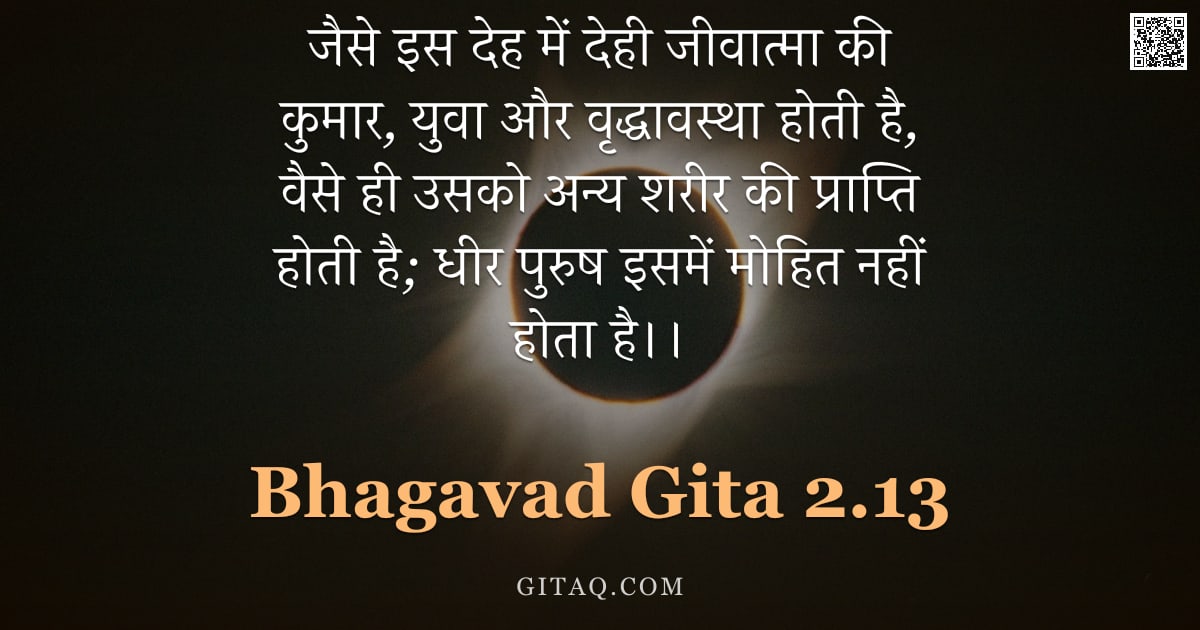
देहिनोऽस्मिन्यथा देहे कौमारं यौवनं जरा | तथा देहान्तरप्राप्तिर्धीरस्तत्र न मुह्यति ||२-१३||
dehino.asminyathā dehe kaumāraṃ yauvanaṃ jarā . tathā dehāntaraprāptirdhīrastatra na muhyati ||2-13||
इस श्लोक का अर्थ क्या है?
यह श्लोक भगवान कृष्ण द्वारा अर्जुन को दिया गया है, जो युद्ध के मैदान में दुख और संशय की अवस्था से गुजर रहे हैं। कृष्ण समझाते हैं कि जैसा देही जीवात्मा बचपन से लेकर बुढ़ापे तक शरीर बदलता रहता है, वैसे ही मृत्यु के बाद वह नए शरीर में प्रवेश करता है। इस तथ्य को जानने वाला स्थिर-बुद्धि (धीर) व्यक्ति देह के परिवर्तन या अंत पर विचार करके कभी भी मोहित या दुखी नहीं होता।
इसके पीछे का सिद्धांत
इस श्लोक का आधार 'ज्ञान योग' (Jnana Yoga) की धारा में पड़ता है, जो आत्मा और देह के बीच के अंतर को स्पष्ट करता है। यह 'सांख्य तत्वों' पर केंद्रित है कि सच्चा स्वयं (आत्मन्) न तो जन्म लेता है और न ही मरता है; वह केवल शरीर का परिवर्तन देख रहा होता है, इसलिए इसे 'अभेदज्ञान' या आत्मा की अमरता समझना चाहिए।
शब्दार्थ
पारंपरिक भाष्य
यह कहाँ घटित होता है
यह संवाद महाभारत के युद्धक्षेत्र कुरुक्षेत्र में भगवान श्रीकृष्ण और अर्जुन के बीच हो रहा है, जहाँ पांडवों का सेनापति बनकर लड़ने की जिम्मेदारी थी। इससे पहले, द्रोणाचार्य द्वारा अपनी शिक्षकों को मारने वाले कौरवों की भीड़ देख कर अर्जुन ने अपने धनुष फेंक दिया और स्वजन-संघर्ष के दुख से व्याकुल हो गए थे। भगवान श्रीकृष्ण, जो संपूर्ण ज्ञान का साक्षात्कारी हैं, ने 'सांख्य योग' अध्याय की शुरुआत में अर्जुन को यह समझाकर उन्हें संशय मुक्त करने का प्रयास किया कि आत्मामृत्यु नहीं होती।
आज के जीवन में
कल्पना करें कि एक बड़ा व्यवसायी अपनी कंपनी के पुराने उत्पादों को बाजार में बदलने या पूरी तरह नए रास्ते पर जाने की चुनौती का सामना कर रहा है, जिससे उसे लगता है कि उसकी मेहनत व्यर्थ हो रही है। इस श्लोक का सिद्धांत यह बताता है कि जब तक वह 'आत्मा' (उसका मूल उद्देश्य और क्षमता) को समझता रहेगा, तब तक नई परिस्थितियों या विफलताओं से डरना नहीं होगा। जैसे शरीर बदलने पर बुद्धिमान व्यक्ति रोते नहीं हैं, वैसे ही व्यवसायी भी पुराने रूपों के अंत में नए अवसरों को देखकर आत्मविश्वास बनाए रख सकता है और निराशा के बजाय सकारात्मक कदम उठाता रहना चाहिए।
बच्चों के लिए सरल व्याख्या
कल्पना करो कि तुम्हारे पास पुराने जूते हैं जो अब छोटे हो गए, तो क्या तुम उनसे उदास रहोगे? बिल्कुल नहीं, क्योंकि तुम नए और बड़े आकार के जूते पहन लो। हमारी शरीर भी उसी तरह काम करता है; जैसे एक दिन तुम पालतू कुत्ता या खिलौना छोड़कर कुछ नया लेते हो, वैसे ही देह बदलने पर भी हमारा असली स्वयं (आत्मा) नहीं मरता। जब तुम्हें यह समझ आ जाए कि शरीर बस एक कपड़ा है जो बदला जाता है, तो कोई बात डराती या उदास करके रोना शुरू करने वाली नहीं होगी।
दैनिक चिंतन
प्रिय पाठक, क्या आपने कभी सोचा है कि आपके अंदर का 'दृष्टिकोण' (धीर पुरुष) हमेशा स्थिर बना रहता है भले ही बाहरी परिस्थितियां या शारीरिक अवस्थाएं बदलती हों? जैसे देह में बचपन से युवावस्था और फिर वार्धक्य आना स्वाभाविक है, उसी प्रकार यह जन्म-मृत्यु का चक्र भी आपकी अविनाशी आत्मा के लिए केवल एक परिवर्तन मात्र है। जब आप इस गहरे सत्य को अपने हृदय में उतरने देंगे, तो डर और मोह की धूल मिट जाएगी और आपके मन में शांति स्थापित होगी।
आज के लिए एक अभ्यास
आज अपने शरीर को केवल एक साधन मानें, न कि आपका वास्तविक 'मैं'। जब भी कोई बदलाव या उलझन आए, स्वयं से पूछें: क्या यह मेरे अविनाशी स्वरूप को प्रभावित कर रहा है? इस विचार पर ध्यान केंद्रित करें कि जैसे बचपन और बुढ़ापा देह के संक्रमण हैं, वैसे ही मृत्यु भी एक नई शुरुआत मात्र है।
मुख्य शिक्षाएँ
- देह और देही का भेद (Distinction between Body and Soul)
यह श्लोक स्पष्ट करता है कि हमारा वास्तविक स्वत्व न तो बचपन में है, न युवा अवस्था में, और न ही बुढ़ापे में; यह अजर-अमर आत्मा (Atman) है जो देह का संचालक है। जब तक हम शरीर को 'स्वयं' समझते हैं तब तक परिवर्तन से डर लगता है, परंतु ज्ञानी व्यक्ति जानता है कि केवल वेश बदल रहा है न कि स्वामी। - परिवर्तन की स्वाभाविक प्रकृति (Natural Law of Change)
संयम और समझदारी इस बात में निहित है कि परिवर्तन को देह के नियमों का अंग माना जाए, न कि किसी दुख या क्षति के रूप में। जैसे दिन से रात्रि होती है वैसे ही यह शरीर भी कालान्तर में बदलता रहता है और यही सृष्टि की प्राकृतिक व्यवस्था है। - धीर पुरुष का लक्षण (The Character of the Steady Soul)
'धीर' शब्द का अर्थ है स्थिर बुद्धि वाला व्यक्ति जो परिवर्तन के आगे घबराता नहीं या दुखी नहीं होता। यह समझ कि देहान्तर (अपना दूसरे शरीर में जान) एक नया प्रवेश द्वार है, ही मनुष्य को मोह से मुक्त करके शांति प्रदान करता है।
विषय
संबंधित श्लोक
आगे पढ़ें
- 2.47 — यह श्लोक 'कर्म योग' की मूल सिद्धांत को समझने के लिए आवश्यक है, जो बताता है कि परिणामों से मुक्त होकर कर्म करना चाहिए।
- 3.30 — इस श्लोक में भगवान श्रीकृष्ण आत्मा को समर्पित करके कार्य करने का उपदेश देते हैं, जो 2.13 के 'धीर' पुरुष की अवस्था को गहराई से स्पष्ट करता है।
- 12.15 — जो व्यक्ति इस प्रकार अविनाशी सत्य में स्थिर हो जाता है, वही भगवान का प्रिय बनता है; यह श्लोक बताता है कि ऐसे धीर पुरुष के गुण क्या हैं।
अनुशंसित पुस्तकें
GitaQ earns from qualifying purchases as an Amazon Associate.