भगवद्गीता 6.32
Dhyana Yoga · हिन्दी अनुवाद
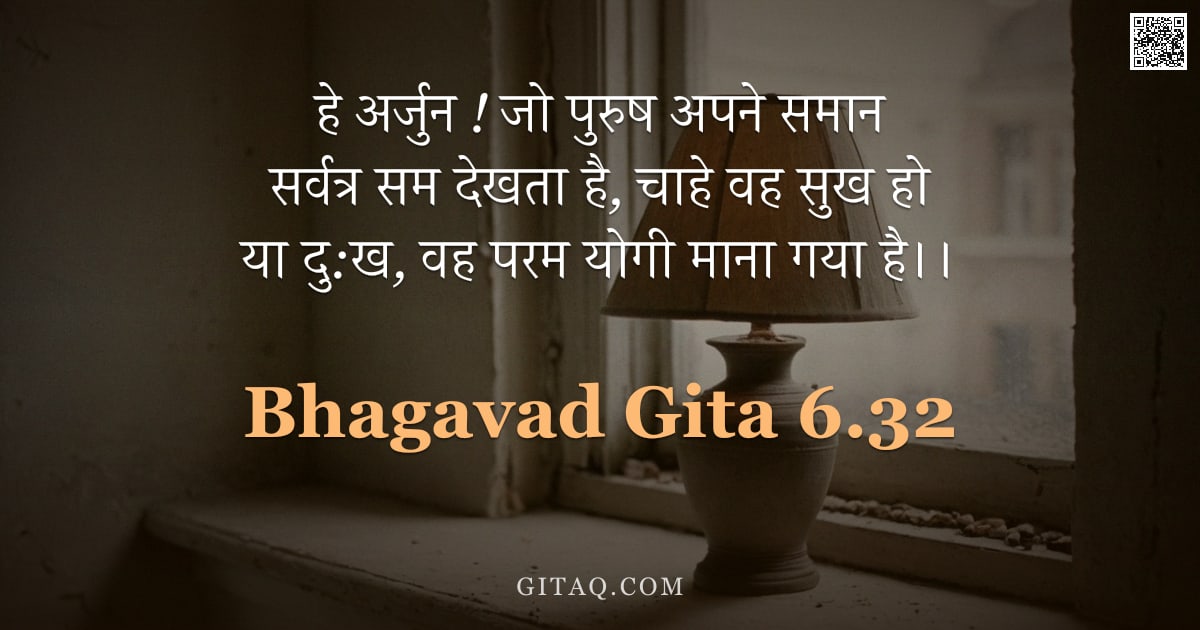
आत्मौपम्येन सर्वत्र समं पश्यति योऽर्जुन | सुखं वा यदि वा दुःखं स योगी परमो मतः ||६-३२||
ātmaupamyena sarvatra samaṃ paśyati yo.arjuna . sukhaṃ vā yadi vā duḥkhaṃ sa yogī paramo mataḥ ||6-32||
इस श्लोक का अर्थ क्या है?
भगवान कृष्ण अर्जुन से कह रहे हैं कि सच्चा योगी वही है जो दूसरों को अपने समान देखता है। यदि वह सुख में हो या दुःख में, उसे किसी भी स्थिति में भेदभाव नहीं करना चाहिए और न ही उसे परवाह करनी चाहिए। यह श्लोक आत्म-समान्य (Atmaupamya) के सिद्धांत को समझाता है कि सभी प्राणियों की आत्मा एक जैसी होती है, इसलिए प्रेम और दयाभाव में सबको बराबर मानना परम योग का लक्षण है।
इसके पीछे का सिद्धांत
यह श्लोक ध्यान योग (Dhyana Yoga) का एक महत्वपूर्ण पहलू है जो ज्ञान योग (Jnana Yoga) और समदृष्टि के सिद्धांत पर आधारित है। यह 'वैश्वदेही' या सर्वत्र आत्म-समान्यता की अवधारणा को विकसित करता है, जिसका अर्थ है कि ब्रह्म में सभी प्राणियों का एक ही सत्य रूप निहित होता है और भेदभाव करना अनिष्टाज्ञान (अविद्या) का परिणाम है।
शब्दार्थ
पारंपरिक भाष्य
यह कहाँ घटित होता है
यह श्लोक महाभारत के युद्धक्षेत्र कुरुक्षेत्र पर स्थित है, जहाँ अर्जुन ने भगवान कृष्ण को अपने दायित्वों और संघर्षों से निराश होकर हथियार डालने का निर्णय लिया था। इससे ठीक पहले (छोटे 6.31 में) भगवान बता चुके हैं कि योगी कैसे अहंकार को त्यागे, लेकिन अब वे उसे परम स्तर की दृष्टि बतला रहे हैं। कुरुक्षेत्र के तनावपूर्ण माहौल में जहाँ सभी अपने ही रिश्तेदारों से लड़ने का विचार कर रहे थे, यह श्लोक अर्जुन को एक उच्च मानसिकता प्रदान करता है जो वैयक्तिक दुःख या सुख से ऊपर हो।
आज के जीवन में
आपके ऑफिस में जब कोई सहकर्मी बहुत सफल होता है (सुख) और दूसरा बुरा फल दे रहा है (दुःख), तो एक योगी की तरह आप दोनों के प्रति समान भाव रखते हैं। आप न तो उसकी उच्च स्थिति पर जलते हैं और न ही उसके पतन पर तिरस्कार करते हैं, बल्कि उनमें से किसी को भी अपना अलग 'अहं' नहीं मानते। इससे आपके मन में शांति आती है और आप कठिन निर्णय लेने या टीम के लिए काम करने की स्थिति में बिना पक्षपात किए कार्य कर सकते हैं।
बच्चों के लिए सरल व्याख्या
कल्पना करो कि तुम्हें दुनिया के हर किसी को अपने छोटे भाई या बहन की तरह समझने वाला एक जादू मिल गया हो। चाहे कोई खुश हो और हंसे, या रो रहा हो, उसकी आत्मा वही है जो तेरी आत्मा है। जब तुम सबको अपना ही मानकर प्यार करते हो, तो दुनिया में सुख-दुःख का फर्क नहीं रहता और तुम सच्चे योद्धा बन जाते हो।
दैनिक चिंतन
आज जब भी आपको सुख मिले या दुःख हो, थोड़ा रुकिए और सोचिए कि यह अनुभव आपके अंदर के किसी और के लिए भी वैसा ही महत्व रखता है जितना आपका अपने लिए होता है। वास्तव में परम योगी वही है जो अपनी सीमाओं को पार करके दूसरे की स्थिति में स्वयं को देख सकता है, चाहे वह खुशी हो या कष्ट। जब हम 'स्व' और 'पर' के बीच का भेद मिटाते हैं, तो प्रेम और समर्पण का मार्ग अपने आप खोल जाता है।
आज के लिए एक अभ्यास
आज अपनी आँखें बंद करें और एक गहरी सांस लें। स्वयं को उस सुख या दुःख की स्थिति में कल्पना करें जिसने आपको पहले प्रभावित किया था, लेकिन अब उसे किसी अन्य व्यक्ति के लिए वही महसूस करते हुए देखें। इस भावना से जुड़कर यह समझें कि आपका आनंद और गम दोनों दूसरों का भी हैं, क्योंकि सबमें एक ही चेतना निवास करती है।
मुख्य शिक्षाएँ
- समानता में दृष्टि (Equality in Vision)
यह कथन बताता है कि सच्चा योगी किसी भी स्थिति—चहे वह सुख हो या दुःख—में सबके प्रति समान भाव रखने वाला होता है। यह केवल शारीरिक नहीं, बल्कि आत्मिक स्तर पर 'मैं' और 'तुम' में अंतर न मानकर सर्वत्र एकत्व को देखना है। - आत्माप्यम् (Self-Identification with All)
'आत्मौपायमेन' का तात्पर्य यह है कि प्रत्येक जीव में वही परम आत्मा (Brahman) निवास करती है, इसलिए दूसरे के सुख या दुःख को अपना समझना आवश्यक है। जब तक हम स्वयं और अन्य प्राणियों की पहचान नहीं करते, तब तक उच्चतम योग का अनुभव संभव नहीं होता। - परमात्मन्युपलब्धि (Realization of the Supreme)
यह दृष्टि केवल एक आदर्श न होकर 'सर्वत्र समं पश्यति' का अनुभव है, जो साधक को दुःख और सुख की द्वंद्व से मुक्त कर देता है। इस स्थिति में व्यक्ति सच्चे परम योगी (Paramo Mataḥ) के रूप में स्थापित हो जाता है क्योंकि वह ईश्वर का सर्वव्यापी पक्ष देख लेता है।
विषय
संबंधित श्लोक
आगे पढ़ें
- 2.47 — इससे कर्मयोग का मूल सिद्धांत मिलता है कि फल की चिंता किए बिने समभाव में कार्य करना आवश्यक है, जो इस श्लोक के 'सम दृष्टि' से जुड़ा है।
- 3.30 — इह कर्मों को ईश्वर को अर्पित कर देना और समत्व का भाव रखने पर जोर दिया गया है, जो सुख-दुःख में स्थिर रहने की नींव रखता है।
- 12.15 — जिसके लिए न दुःख होता है और न ही वह किसी से डरता है, वही भगवान का प्रिय है; यह श्लोक सुख-दुःख में समान रहने वाले योगी के गुणों को विस्तार से बताता है।
अनुशंसित पुस्तकें
GitaQ earns from qualifying purchases as an Amazon Associate.