Bhagavad Gita 2.56
Sankhya Yoga · English Translation
दुःखेष्वनुद्विग्नमनाः सुखेषु विगतस्पृहः | वीतरागभयक्रोधः स्थितधीर्मुनिरुच्यते ||२-५६||
duḥkheṣvanudvignamanāḥ sukheṣu vigataspṛhaḥ . vītarāgabhayakrodhaḥ sthitadhīrmunirucyate ||2-56||
What Does This Verse Mean?
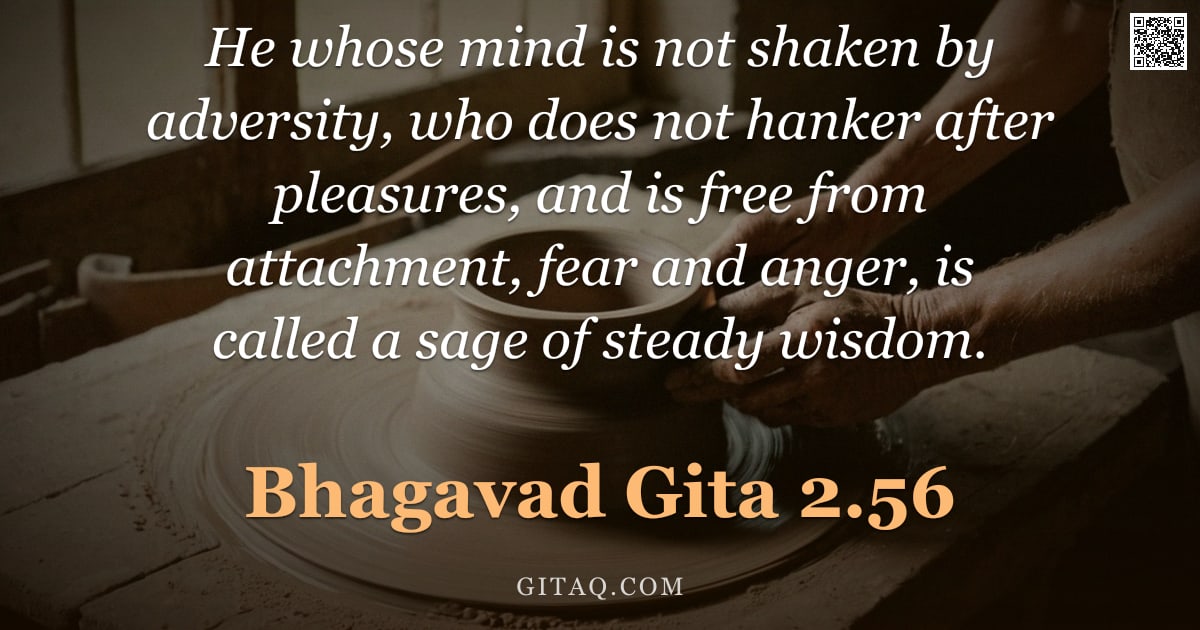
In this verse, Lord Krishna describes the mark of a person with steady wisdom to Arjuna on the battlefield of Kurukshetra. He explains that such a sage remains calm and untroubled during difficult times (adversity) without craving for enjoyment when things go well (pleasure). This individual has transcended attachment, fear, and anger, maintaining inner stability regardless of external circumstances.
The Teaching Behind It
This verse is central to Sankhya Yoga and Karma Yoga within the Gita's framework, focusing on the development of 'Sthitaprajna' (steady wisdom). It details the state of equanimity where one transcends the dualities of pleasure and pain, which are essential prerequisites for realizing the Self through detachment.
Word by Word
Classical Commentary
Where This Happens
This verse appears in Chapter 2 of the Bhagavad Gita during the dialogue between Lord Krishna and Prince Arjuna on the battlefield of Kurukshetra. Just prior to this, Arjuna was overwhelmed by grief and fear at the prospect of fighting his own relatives, refusing to pick up his bow. Krishna has been teaching him about the eternal nature of the soul (Atman) and now defines the qualities of a 'Sthitaprajna' or one established in wisdom as the ideal state Arjuna must strive for.
Living It Out Today
Consider a professional facing an unexpected layoff: instead of spiraling into panic, self-pity, or lashing out at colleagues with anger, they maintain their composure and focus on planning their next steps calmly. Similarly, when that same person receives a sudden promotion or bonus, they do not become arrogant, obsessed with the new status, or fearful of losing it; they simply accept the change without attachment. This balanced approach allows for clear decision-making during high-pressure situations rather than being ruled by emotional swings.
Explained for Children
Imagine you are building a sandcastle at the beach. If someone knocks it down or if the tide comes in too fast, you don't cry or get angry—that is being unshaken by bad things. But even when your castle looks perfect and everyone claps for it, you don't become crazy with excitement; you stay calm inside. A wise person keeps their heart steady like a deep ocean that stays still on top no matter how stormy the wind blows.
Daily Reflection
You are not required to suppress your emotions to find peace; rather, true steadiness grows when you stop letting external circumstances dictate your inner state. When challenges arise today, try viewing them as the very soil where your resilience is cultivated, and when joy comes, receive it without grasping too tightly. Remember that freedom from fear and anger does not mean becoming cold or detached, but remaining fully present while undisturbed by life's inevitable fluctuations.
A Practice for Today
Close your eyes and notice where your mind currently clings to comfort or recoils from discomfort. Take a deep breath, allowing the urge to chase pleasure or avoid pain to dissolve into stillness, anchoring your awareness in that unshaken space.
Key Teachings
- Equanimity in Adversity
A sage of steady wisdom maintains a calm mind even when facing severe hardship or pain. This stability is not forced suppression, but a deep understanding that the self remains untouched by external suffering. - Freedom from Craving
True liberation involves letting go of the desperate hunger for pleasurable experiences and sensory gratification. When one ceases to hanker after happiness in objects, they become naturally free from disappointment when those objects are absent. - The Rootless State
Attachment, fear, and anger stem from the same root: a lack of self-sufficiency. When one realizes their wholeness within, these three destructive emotions naturally vanish because there is no perceived threat or loss to react against.
Themes
Related Verses
Read This Next
- 2.47 — Read this next to understand how one performs action without attachment to results, which is the practical application of steady wisdom.
- 3.30 — This verse complements 2.56 by instructing you to surrender actions and their fruits to the Divine as a method to transcend fear and anger.
- 12.15 — Read this to see how Krishna describes the devotee who is exactly like the sage of steady wisdom: one whom no one can disturb or delight excessively.
Recommended Reading
GitaQ earns from qualifying purchases as an Amazon Associate.