भगवद्गीता 2.19
Sankhya Yoga · हिन्दी अनुवाद
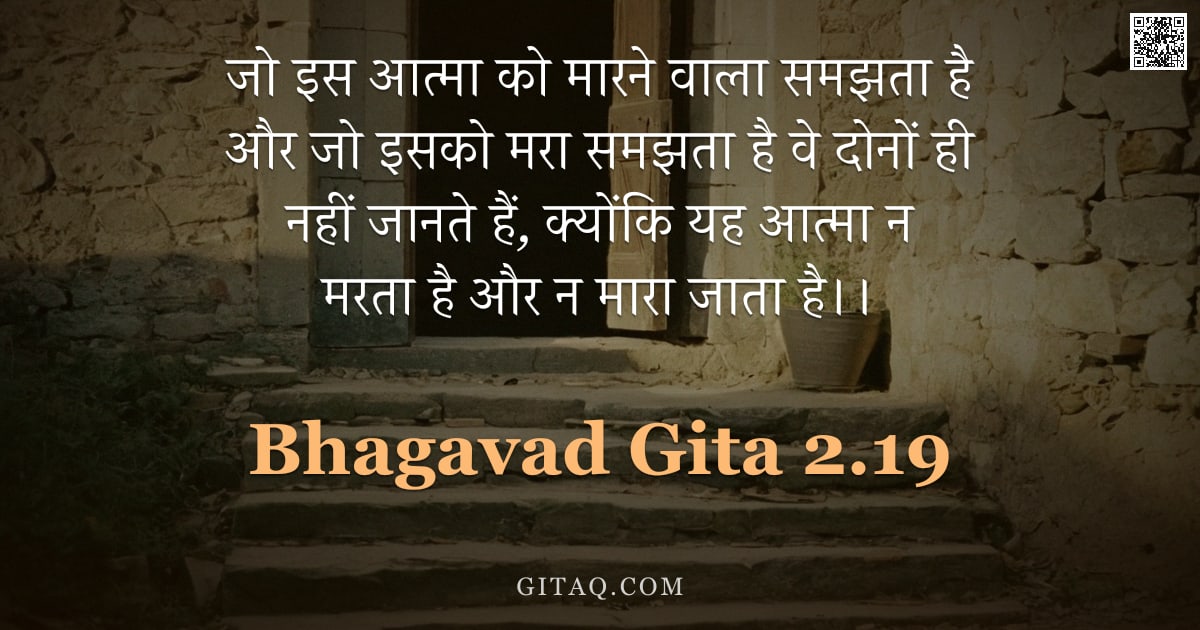
य एनं वेत्ति हन्तारं यश्चैनं मन्यते हतम् | उभौ तौ न विजानीतो नायं हन्ति न हन्यते ||२-१९||
ya enaṃ vetti hantāraṃ yaścainaṃ manyate hatam ubhau tau na vijānīto nāyaṃ hanti na hanyate ||2-19||
इस श्लोक का अर्थ क्या है?
भगवान कृष्ण अर्जुन को समझा रहे हैं कि आत्मा न तो मरती है और न ही कोई उसे मार सकता है। जो लोग सोचते हैं कि यह शरीर या आत्मा किसी से मारी गई, वे गलत धारणा में हैं क्योंकि वास्तविक स्वरूप का अज्ञान उन्हें होता है। इस श्लोक का मुख्य सिद्धांत यह है कि आत्म-सत्य नष्ट होने योग्य नहीं है और न ही उसे कोई हनन कर सकता है।
इसके पीछे का सिद्धांत
यह श्लोक संख्या (Sankhya) योग की मुख्य अवधारणाओं का समर्थन करता है और 'ज्ञान' (Jnana Yoga) के पथ पर आधारित है। यह आत्मा की अमरता, अनंत स्वरूप और उसके नश्वर प्रकृति से भिन्न होने वाले सिद्धांत को विकसित करता है जो कर्म योग का भी मूल आधार है।
शब्दार्थ
पारंपरिक भाष्य
यह कहाँ घटित होता है
यह श्लोक महाभारत के युद्धक्षेत्र कुrukshetra पर भगवान श्रीकृष्ण द्वारा अर्जुन को दिये गये उपदेश का हिस्सा है, जहाँ कुरु क्षेत्र में योद्धाओं की भीड़ खड़ी थी। इससे ठीक पहले श्लोकों में कृष्ण ने अर्जुन के दुःख और मोह को हटाने के लिए 'अव्यापार' (दुष्ट भावना) का वर्णन किया था, क्योंकि अर्जुन अपने ही बंधुओं और गुरुओं को मारने से डरा हुआ था। कृष्ण ने उस समय स्पष्ट कर दिया कि युद्ध में शरीरों के नष्ट होने पर आत्मा का कोई दोष नहीं लगता है, जो पांडव वंश की जीत के लिए आवश्यक धर्म का पालन करने को प्रेरित करता है।
आज के जीवन में
मान लीजिए आपकी कंपनी में किसी बड़े संरचनात्मक बदलाव (restructuring) या रोज़गार जाने जैसी स्थिति आ गई, जिससे आपको लगता है कि 'मैं खो गया' या 'मेरा भविष्य मारा जा रहा है।' इस श्लोक का सिद्धांत यह बताएगा कि आपकी वास्तविक पहचान (आत्मा/कौशल) नष्ट नहीं हुई, बस एक बाहरी परिस्थिति बदल गई। आपको अपनी आत्म-शक्ति पर भरोसा रखना चाहिए और नई चुनौतियों को स्वीकार करके आगे बढ़ने के लिए तैयार हो जाना चाहिए, ना कि अतीत में खोकर डरें।
बच्चों के लिए सरल व्याख्या
कल्पना करो कि तुम एक पुरानी कमीज पहने हुए हो जो फट गई, तो क्या तुम्हें मार दिया गया? बिल्कुल नहीं! तुम सिर्फ उस कमीज को बदल लेते हो और नई कमीज पहन लेते हो। वैसे ही हमारी आत्मा शरीर की तरह है; जब शरीर बुढ़ापे में या बीमारी से जाता है, तो आत्मा बस एक दूसरे शरीर के लिए रवाना होती है, वह कभी नहीं मरती और न ही कोई उसे मार सकता है।
दैनिक चिंतन
क्या आपने कभी सोचा है कि आपके भीतर का वह सत्य जो डर से मुक्त है, वही वास्तविक 'आप' हैं? जब हम शरीर के नश्वर होने या किसी हानि को देखते हैं तो भयग्रस्त हो जाते हैं, लेकिन यह आत्मा कभी नहीं मारी जाती और न ही वह मृत्यु का सामना करती है। आपका असली अहंकार इस विश्वास में निहित है कि एक अनंत शक्ति आपके भीतर हमेशा सुरक्षित बनी रहती है। आज अपने सभी डरों को छोड़कर उस शाश्वत सत्य के साथ जुड़े जो न मारा जा सकता और न ही गिरता है।
आज के लिए एक अभ्यास
अपनी आत्मा को एक अमर दीया समझें जो न कभी जलता है और न बुझता। जब भी भय या दुख का स्पर्श हो, मन में शांति से विचार करें कि यह शरीर केवल बदलाव कर रहा है, पर मैं स्वयं नहीं मार सकता हूँ और न ही मेरा अस्तित्व खोया जा सकता है।
मुख्य शिक्षाएँ
- आत्मा का अमर स्वरूप
यह श्लोक स्पष्ट करता है कि आत्मा (स्व) कभी जन्म नहीं लेती और न ही मृत्यु को प्राप्त होती। यह हमेशा से विद्यमान रही है और भविष्य में भी अटल रहेगी, इसलिए कोई वास्तविक क्षय इसमें संभव नहीं है। - मरणासने का अज्ञान
जो व्यक्ति आत्मा को मारने वाला या मरा हुआ समझता है, वह वास्तव में सत्य की अनदेखी कर रहा होता है। यह भ्रम केवल शरीर और बाह्य रूपों तक सीमित रह जाता है, जबकि आत्म-ज्ञान इसे समाप्त करता है। - न तो मारता है न मारा जाता
यहाँ कृष्ण यह सिद्ध करते हैं कि कोई भी जीवित प्राणी दूसरे को वास्तव में नहीं मार सकता और न ही स्वयं किसी के द्वारा मारा जा सकता है। आत्मा की प्रकृति निरंतर बनी रहती है, चाहे शरीर का विनाश क्यों न हो जाए।
विषय
संबंधित श्लोक
आगे पढ़ें
- 2.13 — यह श्लोक आत्मा के जन्म-मृत्यु चक्र और नश्वर शरीर से भिन्न होने का विस्तार से वर्णन करता है।
- 2.18 — इसमें अविनाशी आत्मा की प्रकृति को 'अव्यक्त, अनंत और नित्य' के रूप में बताया गया है जो इस विषय का अनुपालन करता है।
- 2.15 — जो व्यक्ति सुख-दुख दोनों को समान मानता है, वही अमरत्व की प्राप्ति के योग्य होता है और यह भक्ति का आधार बनता है।
अनुशंसित पुस्तकें
GitaQ earns from qualifying purchases as an Amazon Associate.