भगवद्गीता 2.56
Sankhya Yoga · हिन्दी अनुवाद
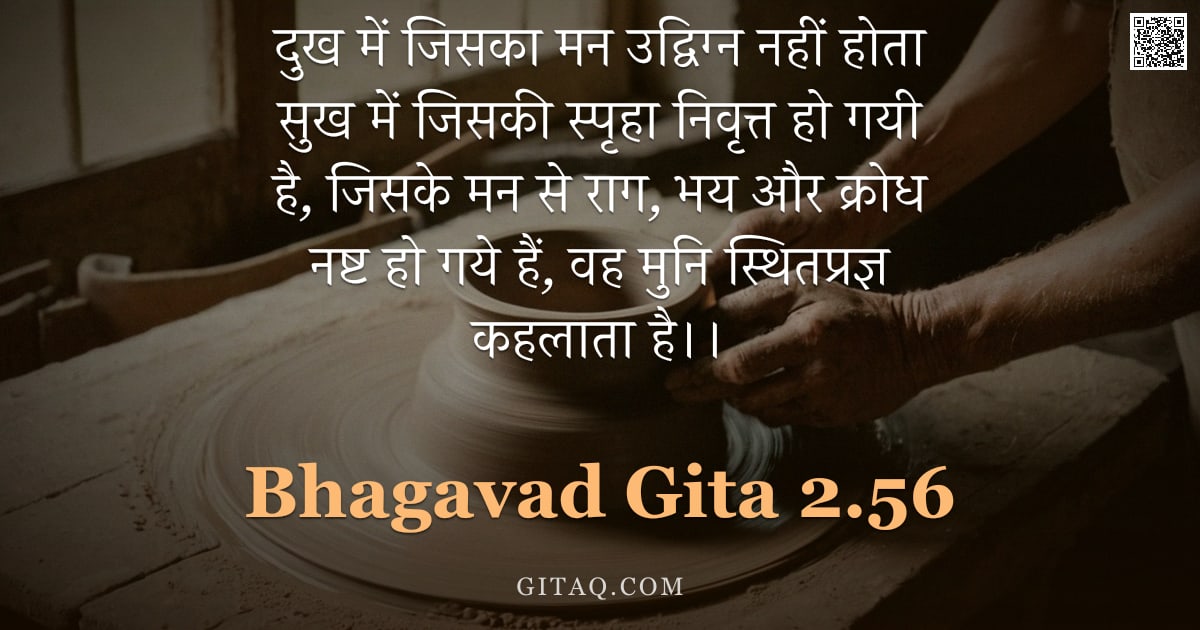
दुःखेष्वनुद्विग्नमनाः सुखेषु विगतस्पृहः | वीतरागभयक्रोधः स्थितधीर्मुनिरुच्यते ||२-५६||
duḥkheṣvanudvignamanāḥ sukheṣu vigataspṛhaḥ . vītarāgabhayakrodhaḥ sthitadhīrmunirucyate ||2-56||
इस श्लोक का अर्थ क्या है?
श्री कृष्ण अर्जुन को समझा रहे हैं कि एक स्थितप्रज्ञ व्यक्ति कैसे होता है। यह श्लोक बताता है कि दुख के समय में मन विकल नहीं होना चाहिए और सुख की प्राप्ति पर भी लालसा न रखनी चाहिए। जब किसी से राग, भय और क्रोध जैसे भाव पूरी तरह मिट जाते हैं, तो वह मुनि या स्थितप्रज्ञ कहलाता है।
इसके पीछे का सिद्धांत
यह श्लोक 'कर्म योग' के सिद्धांतों को मजबूती प्रदान करता है जहाँ कर्ता (कर्मी) और फलों से विराग की अवधारणा दी गई है। यह संख्या दर्शन पर आधारित एक उच्च स्तर का चेतना-अवस्था है, जिसे 'स्थितप्रज्ञ' कहा जाता है, जो आत्मसाक्षात्कार के बाद प्राप्त होती है।
शब्दार्थ
पारंपरिक भाष्य
यह कहाँ घटित होता है
यह श्लोक महाभारत के युद्धक्षेत्र कुरुक्षेत्र में भगवान श्रीकृष्ण द्वारा अर्जुन को समझाए जा रहे 'संख्या योग' अध्याय का हिस्सा है। इससे ठीक पहले, अर्जुने ने द्रौपदी और अपने गुरुओं के सामने युद्ध करने से मना कर दिया था और वे कृष्ण की ओर देखकर विचलित थे। श्रीकृष्ण ने उसे बुद्धि का मार्ग दिखाते हुए बताया कि आत्मसत्व नश्वरा नहीं है, और अब वे एक स्थिर मानव के लक्षण बताने वाले हैं ताकि अर्जुन अपनी भूमिका समझ सके।
आज के जीवन में
मान लीजिए आपने महत्वकारी प्रोजेक्ट में काम किया लेकिन कंपनी ने उसे रद्द कर दिया और आपकी नौकरी खतरें में पड़ गई, जिससे आपको बहुत डर लगा है। एक स्थितप्रज्ञ व्यक्ति इस दुख की घड़ी में भी हताश नहीं होगा, बल्कि शांत दिमाग से अगला कदम उठाएगा। उसी प्रकार, अगर उसे भविष्य में तुरंत प्रमोशन मिल जाता है या बहुत सारा पैसा आ जाता है, तो वह गर्व या लालसा (स्प्रहा) नहीं करेगा और न ही डर की स्थिति से क्रोधित होगा, बल्कि संतुलन बनाए रखेगा।
बच्चों के लिए सरल व्याख्या
क्या आपने कभी देखा है कि अगर खेल में जीत मिले या हार जाएं, तो कुछ बच्चे बहुत ज्यादा खुश या उदास हो जाते हैं? एक अच्छा दोस्त ऐसा नहीं होता; वह हर हालत में शांत रहता है। भगवान कृष्ण कहते हैं कि जब हम दुख में न रोएं और सुख पाकर भी लालची न बनें, तो हमें 'स्थितप्रज्ञ' कहा जाता है, जैसे एक मजबूत पेड़ जो हवा या बारिश से नहीं हिलता।
दैनिक चिंतन
प्यारे मित्र, जीवन के उतार-चढ़ावों में हम अक्सर सुख की चाह और दुख से भागने की प्रबल इच्छा में जीते हैं, जो मन को असंतुलित बना देता है। कृष्ण भगवान आज आपको यह याद दिला रहे हैं कि सच्ची शांति तभी मिलती है जब हम सुख में अहंकार और दुख में हतोत्साहित नहीं होते। आपकी वास्तविक शक्ति इसमें निहित है कि राग, भय और क्रोध जैसे भावों को जड़ से काटकर भीतर एक स्थिर प्रज्ञा (स्थितप्रज्ञ) विकसित करें। आज की चुनौतियों में अपना मन संभालना ही आपकी सबसे बड़ी जीत होगी।
आज के लिए एक अभ्यास
आज के समय में, जब भी दुख या सुख का अनुभव हो रहा है, एक क्षण रुककर अपने मन की प्रतिक्रिया को देखें। स्वयं से पूछें कि क्या यह स्थिति मेरे चित्त को हिला रही है या मैं उससे अपेक्षा और भय के बिना साक्षी बन सकता हूँ? इस अभ्यास में 'स्थितप्रज्ञ' होने का संकल्प लें, जहाँ बाहरी परिस्थितियां आंतरिक शांति को नहीं तोड़ पाती हैं।
मुख्य शिक्षाएँ
- दुख और सुख के प्रति समभाव (Equanimity)
स्थितप्रज्ञ मनुष्य बाहरी परिस्थितियों से प्रेरित होकर न तो दुःख में घबराता है और न ही सुख में अत्यधिक उत्सुक होता है। यह भावनात्मक स्थिरता तभी संभव होती है जब आत्मा अपनी वास्तविक पहचान को जान लेती है। - रोग, भय और क्रोध का पराजय
राग (आसक्ति), भय और क्रोध मानवीय दुःख के मुख्य स्रोत हैं जो बुद्धि को अंधेरे में डाल देते हैं। जब ये तीनों भाव नष्ट हो जाते हैं, तो व्यक्ति मुनि या ज्ञानी कहलाता है क्योंकि उसका चित्त पूर्ण रूप से स्वस्थ और स्पष्ट होता है। - मन की स्थिर बुद्धि (Steady Intellect)
जब मन सभी विषयों के प्रति निष्पक्ष हो जाता है, तो वह 'स्थितधर्म' या स्थिर बुद्धि प्राप्त करता है। यह अवस्था यज्ञ में समर्पण और ज्ञान की गहराई का परिणाम है जो व्यक्ति को अशांति से मुक्त करती है।
विषय
संबंधित श्लोक
आगे पढ़ें
- 2.47 — यह अध्याय का मूल आधार है जो कर्मयोग और फल के प्रति निष्पक्षता पर प्रकाश डालता है, जिससे स्थितप्रज्ञ बनने की राहत मिलती है।
- 3.30 — सभी कर्मों को ईश्वर में समर्पित करने का उपदेश देकर यह श्लोक भय और आसक्ति के अभाव की व्यावहारिक विधि बताता है।
- 12.15 — भक्तों के गुणों में से एक 'जो न दुःख दे सके' और जो सभी को समान देखे, यह श्लोक स्थितप्रज्ञ का आदर्श रूप है।
अनुशंसित पुस्तकें
GitaQ earns from qualifying purchases as an Amazon Associate.