भगवद्गीता 2.66
Sankhya Yoga · हिन्दी अनुवाद
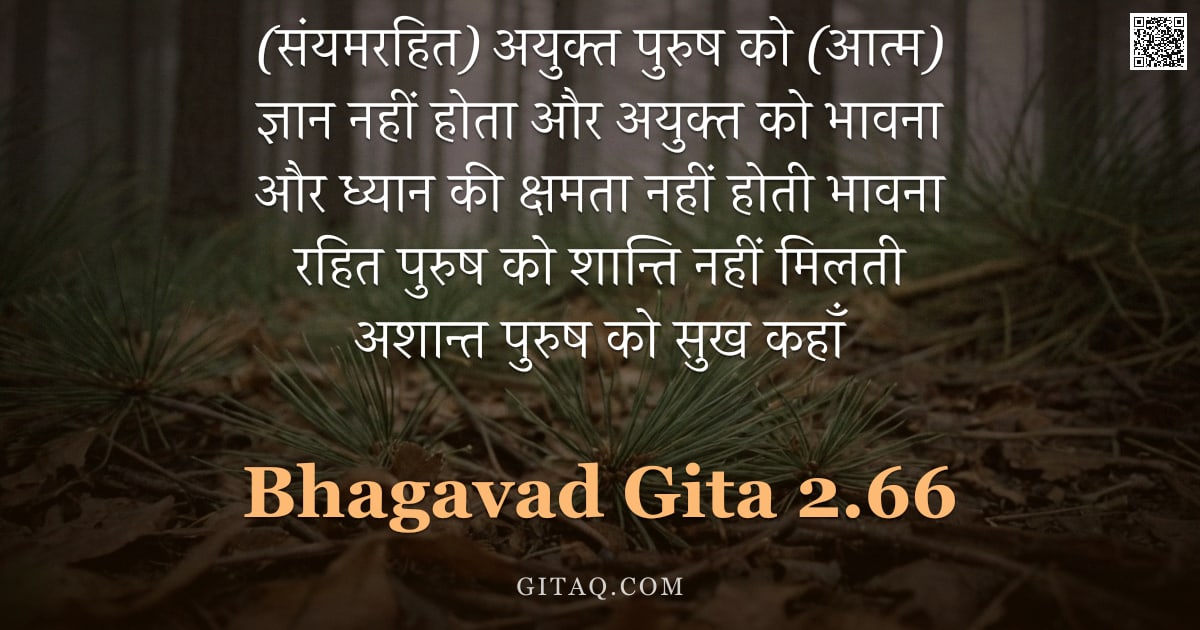
नास्ति बुद्धिरयुक्तस्य न चायुक्तस्य भावना | न चाभावयतः शान्तिरशान्तस्य कुतः सुखम् ||२-६६||
nāsti buddhirayuktasya na cāyuktasya bhāvanā . na cābhāvayataḥ śāntiraśāntasya kutaḥ sukham ||2-66||
इस श्लोक का अर्थ क्या है?
श्री कृष्ण अर्जुन से कह रहे हैं कि बिना आत्म-ज्ञान और संयम वाले व्यक्ति (अयुक्त) के पास न तो सही बुद्धि है, न ही ध्यान करने की क्षमता। जिसके भीतर भावना या चेतना का अभ्यास नहीं होता, उसे मानसिक शांति प्राप्त नहीं हो सकती। अंततः जो शान्त नहीं हैं, वे सुख को कैसे पा सकते हैं? यह श्लोक स्पष्ट करता है कि आंतरिक संघर्ष और बेचैनी वाले व्यक्ति के लिए सच्चा सुख असम्भव है।
इसके पीछे का सिद्धांत
यह श्लोक 'संख्या योग' (Sankhya Yoga) के दार्शनिक सिद्धांतों पर आधारित है जो आत्म-ज्ञान और ध्यान की आवश्यकता को उजागर करता है। यह दर्शाता है कि बुद्धि, भावना (ध्यान), शान्ति और सुख एक क्रमबद्ध प्रक्रिया हैं जहाँ 'अयुक्त' (अस्थिर) होने पर आगे का मार्ग रुक जाता है। इसमें कर्मयोग की नींव तैयार होती है कि बिना मानसिक स्थिरता के सही कार्य नहीं हो सकते।
शब्दार्थ
पारंपरिक भाष्य
यह कहाँ घटित होता है
यह श्लोक महाभारत के युद्धक्षेत्र कुरुক্ষেत्र में स्थित है, जहाँ पांडव सेना और कौरवों की सेना आमने-सामने हैं। इस समय अर्जुन अपने ही रक्तसंबंधियों को मारने के विचार करके भावुक हो चुके हैं और हथियार फेंककर बैठा है, जो एक युद्धरत कर्मयोगी के लिए असंभव लगता था। श्री कृष्ण ने अर्जुन की भ्रम दूर करने के लिए संप्या (ज्ञान) योग का प्रस्ताव किया और अब उन्हें समझा रहे हैं कि बिना आत्म-विश्वास के युद्ध कैसे लड़ा जाए।
आज के जीवन में
मान लीजिए एक कर्मचारी अपनी नौकरी में बहुत तनावग्रस्त है क्योंकि उसे भरोसा नहीं है कि वह सही निर्णय ले पाएगा; उसका मन लगातार चिंता और अशांति से भरा रहता है। यदि यह व्यक्ति आत्म-ज्ञान (अपने कर्तव्य को समझना) और ध्यान की प्रैक्टिस नहीं करेगा, तो वह तनाव के बावजूद सुख या शांति महसूस नहीं कर पाएगा। इस श्लोक का उपयोग करने से उसे पता चलेगा कि पहले अपने मन को स्थिर करना होगा, फिर ही कठिन निर्णय लेने में सफलता और सुख मिलेगा।
बच्चों के लिए सरल व्याख्या
बच्चों की तरह सोचो, अगर तुम बहुत ज्यादा खेल रहे हो या चिंतित होकर रोते रहोगे, तो क्या तुम शांति से खिलवाड़ कर पाओगे? कृष्ण जी कहते हैं कि जैसे बिना ध्यान के मन नहीं सुधरता, वैसे ही हमें पहले अपने दिमाग को शांत करना होगा। अगर तुम्हारा मन बहुत तूफानी है, तो तुम खुश कैसे हो सकते हो? सबसे पहले अपनी आँखों और दिल पर नियंत्रण करो, फिर तुम्हें असली सुख मिलेगा।
दैनिक चिंतन
क्या आपने कभी महसूस किया है कि बाहरी घटनाएं अशांति का कारण बनती हैं? भगवान कृष्ण की यह वाणी हमें याद दिलाती है कि असली शांति और सुख केवल भीतर, बुद्धि के संतुलन से ही आते हैं। जब तक आपका मन स्थिर नहीं होता, तब तक कोई बाहरी सफलता आपको पूर्ण कल्याण नहीं दे सकती। आज अपने अंदर की उस गहराई को खोजें जहां शांति हमेशा मौजूद है।
आज के लिए एक अभ्यास
अपने मन को स्थिर करके बैठें और सोचें कि क्या आप वर्तमान में किसी बाहरी परिणाम की चिंता या अशांति से ग्रस्त हैं। इस क्षण केवल अपनी आंतरिक शांति पर ध्यान केंद्रित करें, यह स्मरण करते हुए कि बिना संयुक्त (संतुलित) बुद्धि वाले पुरुष को सुख नहीं मिल सकता।
मुख्य शिक्षाएँ
- संतुलित बुद्धि ही आत्म-ज्ञान का आधार है (Buddhi as the Foundation of Knowledge)
जब तक मन और इंद्रियां संयत नहीं होतीं, तब तक आत्मा के सच्चे स्वरूप की गहरी समझ अर्थात ज्ञान प्राप्त करना असंभव है। यह बुद्धि का स्थिर होना ही ध्यान (bhāvanā) करने की क्षमता को बढ़ाता है। - शांति के बिना सुख अधूरा और अस्थायी है
जो व्यक्ति मन में शांति नहीं रख पाता, उसे वास्तविक सौभाग्य या 'सुख' का अनुभव कभी नहीं हो सकता। बाहरी सुखों की प्राप्ति के लिए भी आंतरिक शान्ति आवश्यक है, अन्यथा वे क्षणभंगुर होते हैं। - अयुक्त पुरुष का चक्र: ज्ञान से लेकर अशांति तक
यह श्लोक एक स्पष्ट कारण-परिणाम संबंध दिखाता है: बिना संतुलन के बुद्धि नहीं होती, जिससे ध्यान की अनुपस्थिति और फिर अंत में शांति का न होना होता है। यह चक्र तोड़ने का उपाय 'योग' या साधना द्वारा मन को नियंत्रित करना ही है।
विषय
संबंधित श्लोक
आगे पढ़ें
- 2.47 — इसके बाद इस अध्याय के सबसे प्रमुख श्लोक को पढ़ें जो कर्म और फल त्याग का सिद्धांत समझाता है, जो बुद्धि संतुलन की नींव रखता है।
- 3.42 — यह श्लोक मन, इंद्रियों और बौद्धिक क्षमताओं (बुद्धि) के बीच के संबंध को स्पष्ट करता है कि कैसे बुद्धि का संतुलन अशान्त होने से रक्षा करता है।
- 12.15 — इसके बाद कृष्ण द्वारा वर्णित 'योगी' के गुणों को पढ़ें जो शांति प्रिय और सुखदायक हैं, यह देखने के लिए कि स्थिर मन वाला व्यक्ति कैसे परमात्मा में लीन हो जाता है।
अनुशंसित पुस्तकें
GitaQ earns from qualifying purchases as an Amazon Associate.