薄伽梵歌 18.66

Moksha Sanyasa Yoga · 中文翻译
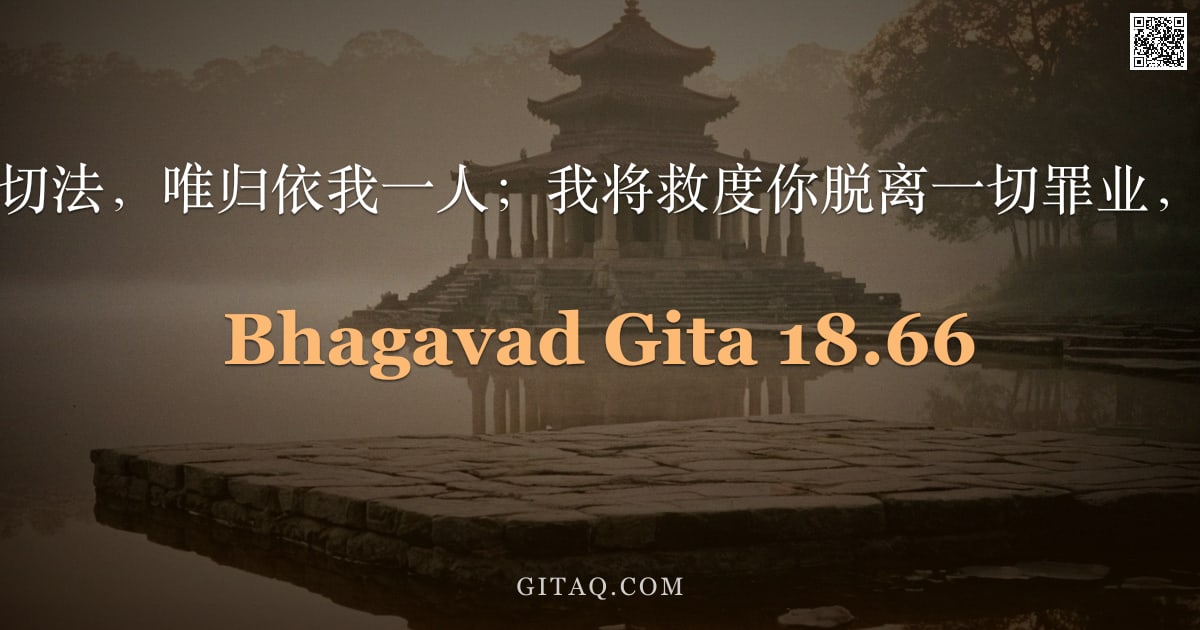
薄伽梵歌 18.66 — "舍弃一切法,唯归依我一人;我将救度你脱离一切罪业,勿忧。"
薄伽梵歌 18.66 — Moksha Sanyasa Yoga
梵文

सर्वधर्मान्परित्यज्य मामेकं शरणं व्रज | अहं त्वा सर्वपापेभ्यो मोक्षयिष्यामि मा शुचः ||१८-६६||

转写

sarvadharmānparityajya māmekaṃ śaraṇaṃ vraja . ahaṃ tvāṃ sarvapāpebhyo mokṣyayiṣyāmi mā śucaḥ ||18-66||

这节经文是什么意思?

这是黑天(Krishna)对阿朱那(Arjuna)说的最后一句也是最重要的一句教诲。黑天要求阿朱那放弃一切其他形式的义务和依赖,完全归依于神我一人。作为回报,黑天承诺将拯救他脱离所有罪业与束缚的恐惧。这一教导的核心是:通过完全的虔诚奉献,灵魂可以获得终极的自由和解脱。

背后的教义

这句偈颂是巴克提瑜伽(Bhakti Yoga)的最高体现,它超越了单纯的行为规范或知识积累,强调通过全然的奉献和臣服来实现救赎。它与吉瓦纳瑜伽(Jnana Yoga)中关于“舍弃”的概念相呼应,但指出这种舍弃的终极形式是对神性的绝对信赖,而非单纯的哲学否定。

逐字释义
सर्वधर्मान् all duties, परित्यज्य having abandoned, माम् to Me, एकम् alone, शरणम् refuge, व्रज take, अहम् I, त्वा thee, सर्वपापेभ्यः from all sins, मोक्षयिष्यामि will liberate, मा dont, शुचः grieve
古典注释
This is the answer given by the Lord to the estion put by Arjuna in chapter II, verse 7 I ask Thee which may be the better tell me that decidedly. I am Thy disciple, suppliant to Thee teach me. All Dharmas Righteous deeds, including Adharma all actions, righteous or unrighteous, as absolute freedom from all actions is intended to be taught here. Taking refuge in Me alone implies the knowledge of unity without any thought of duality knowing that there is nothing else except Me, the Self of all, dwelling the same in all. If thou art established in this faith? I shall liberate thee from all sins, from all bonds of Dharma and Adharma by manifesting Myself as thy own Self. To behold forms is the Dharma of the eye. The support or substratum of all forms is Brahman. When you look at an object behold Brahman Which is the one essence and abandon the form as it is illusory and unreal. Have the same attitude towards the other objects which pertain to the other senses. Give up the JivaDharma (the notions I am the doer o actions? I enjoy. I am a Brahmana. I am a Brahmachari. I am endowed with a little knowledge and power, etc. and get yourself established in BrahmaBhavana (the understanding or knowledge I am Brahman). This is what is meant by taking refuge in Lord Krishna, according to the Vedantins. Work ceaselessly for the Lord but surrender the fruits of all actions to the Lord. Take the Lord as your sole refuge. Live for Him. Work for Him. Serve Him in all forms. Think of Him only. Meditate on Him alone. See Him in all forms. Think of Him only. Meditate on Him alone. See Him everywhere. Worship Him in your heart. Consecrate your life, all actions, feelings and thoughts to the Lord. You will rest in Him. You will attain union with Him. You will attain immortal supreme peace and eternal bliss. This is the view of another school of thought. Sri Sankara very strongly refutes the idea that knowledge in conjunction with Karma (action) produces or leads to liberation. He says that Karma and knowledge may not go together in the same man, that karma helps the man to get purification of the heart, and that right knowledge of the Self alone will give him absolute freedom from Samsara. He says that work and knowledge are like darkness and light, that action is possible only in this universe of illusory phenomena which is the projection of ignorance and knowledge dispels this ignorance. (Cf. III.30IX.22)

发生在何处

这一节位于《摩诃婆罗多》中俱卢之野大战即将开始的高潮部分,是黑天在整场对话中的总结性指令。此时阿朱那正处于极度的精神崩溃和道德困惑之中,刚刚听完关于灵魂不朽、业报法则和多种瑜伽道路的漫长教导后仍感迷茫。这是“解脱与弃绝”(Moksha Sanyasa Yoga)这一章的结尾,黑天在此将之前所有的哲学理论浓缩为一条简单的行动指南:完全的归依。

今日应用

当你面临一个极其艰难的职业抉择或家庭危机,感到无论怎么做都会犯错且充满焦虑时,不要试图靠自己的小聪明去权衡所有利弊。与其在无尽的担忧中瘫痪,不如先放下对结果的控制欲(即“舍弃一切法”),将内心的重担完全托付给更高的智慧或你的信仰核心。当你不再因恐惧失败而犹豫不决时,反而能做出清晰、勇敢且正确的决定,从而从精神的枷锁中获得解脱。

儿童解释

想象一下你迷路在一个巨大的迷宫里,非常害怕且不知道往哪边走对。这时候,你的好朋友(就像黑天)对你说:“别自己乱跑了,把所有其他的路都忘掉,紧紧抓住我的手。”只要阿朱那完全信任并跟随这位朋友,他就能安全走出迷宫,不再担心走错路或遇到危险。这就是说,当我们感到无助时,全心全意地相信一位值得信赖的导师或神,就能获得真正的安全和力量。

每日省思

亲爱的朋友,你是否曾感到肩上的责任过于沉重,仿佛必须独自承担世间的一切?克里希纳在此刻向你发出最温柔的邀请,让你卸下所有名为 '法' (dharma) 的负担和恐惧的重压。当你不再试图掌控一切,而是全然信赖于那超越的智慧时,你会发现一种前所未有的自由与安宁。记住,无需再为过去的过错担忧,因为那份神圣的爱早已承诺将你从所有的业力枷锁中释放出来。

今日的修习

此刻,试着将心中所有的重担、计划和对结果的执着轻轻放下。全然地转向内在的觉知,如同迷途的孩子归向慈父的怀抱。在心中默念:'我交托一切,唯有您是我的庇护所',让焦虑在信任中消融。

核心教导

  1. 舍弃相对之法的绝对归依
    经文中的 'sarvadharmān' (一切法) 并非指否定道德或责任,而是指放下对自我努力结果的执着以及对不同宗教形式的外在依赖。真正的解脱始于将个体意志完全臣服于克里希纳的至高意志之中,而非依靠个人的有限能力。
  2. 全然的庇护与释放
    'māmekaṃ śaraṇaṃ vraja' (归依我一人) 强调了瑜伽修习的核心是建立一种排他性的、充满爱的神圣关系。这种无条件的交托带来了 'sarvapāpebhyo mokṣyayiṣyāmi' (救度你脱离一切罪业) 的恩典,意味着神性力量将自动处理你的业力后果。
  3. 无畏的信任
    'mā śucaḥ' (勿忧/不要悲伤) 是克里希纳对阿朱那的直接安慰,也是对所有寻求解脱者的终极承诺。当我们确信神是我们的守护者时,恐惧和焦虑便失去了立足之地,内心自然生起不可动摇的平静与信心。

主题

归依与臣服 (Surrender)业报解脱 (Liberation from Karma)虔诚奉爱 (Devotion/Bhakti)恐惧的消除 (Overcoming Fear)终极真理 (Ultimate Truth)行动中的不执着 (Detachment in Action)

相关经文

2.473.304.186.59.34

接下来阅读

  1. 2.47 — 此节教导你如何在行动中获得 'dharma' (法) 的平衡而不执着结果,是理解如何正确交托的前提。
  2. 3.30 — 这一节讲述了将一切行为奉献给克里希纳的具体方法,帮助你在日常生活中实践这种全然的归依。
  3. 12.15 — 了解一位 'mām ekam śaraṇaṃ vraja' (只归依我) 的奉献者所具备的品质,能加深你对这一最高教导的理解和向往。

推荐阅读

GitaQ earns from qualifying purchases as an Amazon Associate.

分享这节经文

常见问题

这句经文属于哪种瑜伽(Yoga)的范畴?
这是巴克提瑜伽(Bhakti Yoga,奉爱瑜伽)的核心教导,因为它强调通过爱与完全的信任来建立与神圣的连接。同时,它也包含了吉瓦纳瑜伽(Jnana Yoga,智慧瑜伽)中关于“舍弃”的智慧,即认识到唯有神是终极的庇护所。在《博伽梵歌》的整体架构中,这是所有瑜伽道路的汇合点,指向最终的解脱(Moksha)。
其他语言: 薄伽梵歌 18.66 →