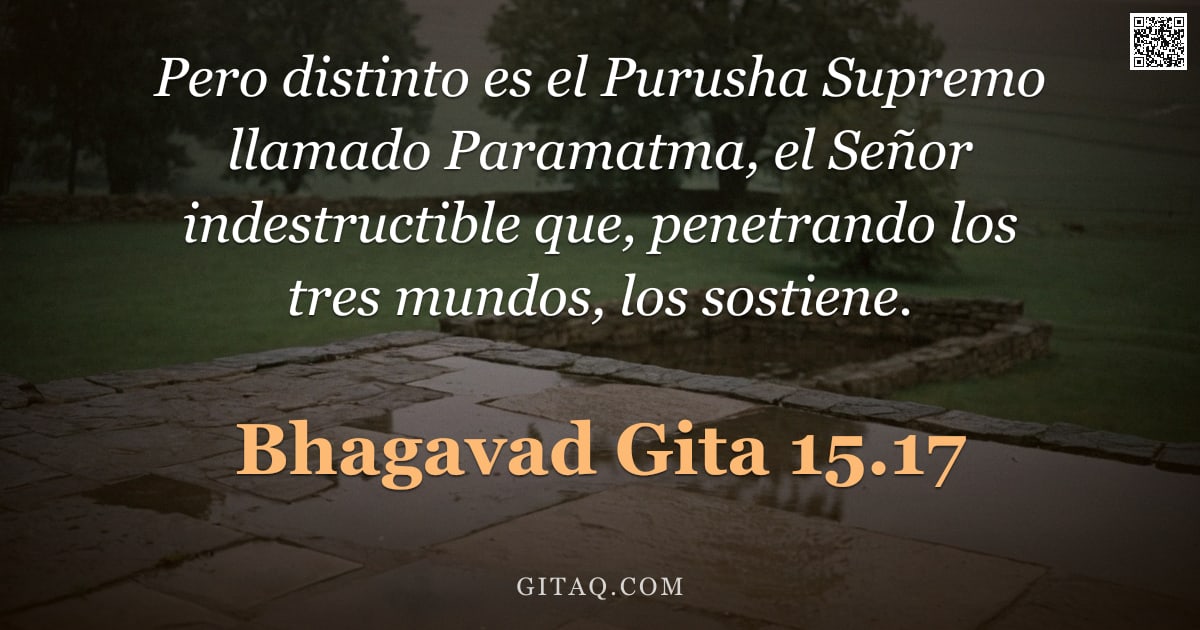
Bhagavad Gita 15.17
Purushottama Yoga · Traducción al español
उत्तमः पुरुषस्त्वन्यः परमात्मेत्युधाहृतः | यो लोकत्रयमाविश्य बिभर्त्यव्यय ईश्वरः ||१५-१७||
uttamaḥ puruṣastvanyaḥ paramātmetyudhāhṛtaḥ . yo lokatrayamāviśya bibhartyavyaya īśvaraḥ ||15-17||
¿Qué significa este verso?
En este versículo, Krishna le explica a Arjuna que existe una entidad distinta llamada el Purusha Supremo o Paramatma. A diferencia de las almas individuales, este es un Señor indestructible (Avyaya) que penetra y sostiene los tres mundos universales. La enseñanza central es reconocer la presencia divina omnipresente que mantiene todo el cosmos en existencia.
La enseñanza detrás
Este versículo pertenece a la doctrina de Bhakti Yoga y Jnana Yoga, integrando la devoción personal con el conocimiento metafísico sobre la naturaleza del Ser Supremo. Desarrolla específicamente el concepto de Brahman como un principio activo e indestructible que sostiene la creación sin ser afectado por ella.
Palabra por palabra
Comentario clásico
Dónde ocurre
Este versículo se encuentra en el Capítulo 15 del Bhagavad Gita, titulado 'Purushottama Yoga', donde Krishna está revelando su naturaleza más elevada a Arjuna. En este punto de la batalla en Kurukshetra, Krishna ya ha explicado cómo disolver las ataduras materiales y ahora eleva la conversación hacia lo trascendental. Arjuna, que inicialmente dudaba por miedo y confusión moral, recibe aquí una consuelo profundo al saber que el universo no es caótico, sino sostenido por un Señor inmutable.
Aplicación para hoy
Cuando te enfrentes a una situación laboral o familiar donde sientes que todo está colapsando o que las responsabilidades son abrumadoras, recuerda la enseñanza de este versículo sobre el sostén divino. En lugar de intentar controlar cada detalle con ansiedad, visualiza al Señor Avyaya sosteniendo los cimientos de tu vida mientras tú haces tu parte con dedicación. Esta perspectiva transforma la carga del miedo en una sensación de seguridad interior y confianza absoluta.
Explicado para niños
Imagina que hay una gran casa llamada el universo con muchas habitaciones diferentes, como si fueran tres pisos o 'mundos'. Krishna nos dice que hay un Guardián Invisible y muy fuerte dentro de esta casa llamado Paramatma. Él es como la energía invisible que mantiene las paredes en pie y todo funcionando sin romperse nunca. Aunque no podemos verlo con nuestros ojos, él sostiene toda la casa para todos nosotros.
Reflexión diaria
Hoy te invito a ver más allá de las preocupaciones diarias que parecen sacudir tus cimientos. Cuando sientes que todo está en movimiento o inestable, recuerda que existe un Señor interior indestructible (Ishvara) que sostiene esos tres mundos y tu propia realidad sin agotarse nunca. Al descansar en esa presencia eterna dentro de ti, encontrarás una paz profunda que ninguna circunstancia externa puede perturbar.
Una práctica para hoy
Cierra los ojos y visualiza cómo la misma Consciencia indestructible que sostiene el universo entero habita también dentro de tu propio corazón, como un testigo silencioso e inmutable. Reconoce en este instante que tú no eres solo el cuerpo o la mente cambiantes, sino ese Purusha Supremo (Paramatma) que permea y mantiene todos los aspectos de tu existencia.
Enseñanzas clave
- La dualidad del Ser
El versículo revela dos aspectos: el ser individual limitado y el Purusha Supremo (Paramatma) trascendente. Esta distinción nos enseña que nuestra verdadera naturaleza es infinita, no la identidad temporal con la cual solemos confundirnos. - El Sostenedor Universal
Krishna describe al Señor como aquel que penetra y sostiene los tres mundos sin ser afectado por ellos. Esto nos recuerda que el universo entero depende de una fuerza consciente e indestructible para su continuidad. - La Identidad Indestructible
A diferencia del mundo material, el Paramatma es eterno y no se degrada con el tiempo o la destrucción. Reconocer esta cualidad nos libera del miedo a la pérdida y nos ancla en nuestra verdadera esencia espiritual.
Temas
Versos relacionados
Lee esto después
- 13.24 — Para profundizar en la naturaleza del Ser Supremo (Purushottama) y cómo se diferencia del alma individual.
- 9.5 — Para comprender el misterio de Dios permeando todo lo creado sin estar limitado por su creación misma.
- 18.61 — Como cierre, para ver al Señor situado en el corazón como testigo y permisor del movimiento de todas las criaturas.
Lecturas recomendadas
GitaQ earns from qualifying purchases as an Amazon Associate.